
After unconditional — where does the deposit %%actually go%%?
A one-page flowchart covering the three common paths for the deposit after a contract goes unconditional: through the real estate agent, through the lawyer's trust account, or held as stakeholder for off-the-plan purchases.

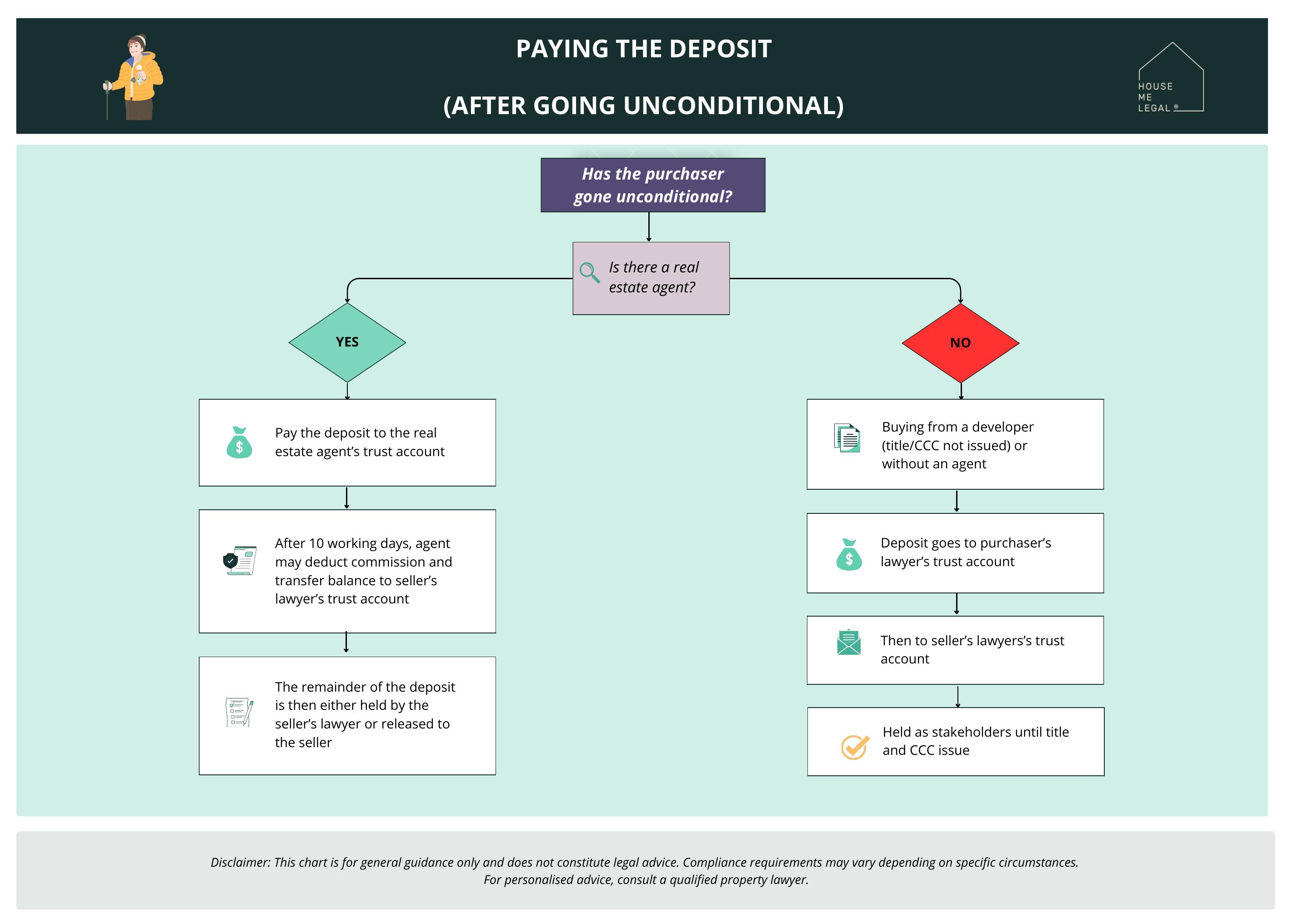
Two questions. Three paths.
Once the contract is unconditional, the deposit has to move. Where it moves depends on two things — whether there's an agent, and whether the title has been issued.
Has the purchaser gone unconditional?
Is there a real estate agent?
Yes → pay deposit to the agent's trust account
After 10 working days → agent may deduct commission, transfer balance to seller's lawyer
Remainder held by seller's lawyer or released to seller
Buying from developer (off-the-plan) or privately
Deposit goes to purchaser's lawyer's trust account
Then transferred to seller's lawyer's trust account
Held as stakeholders until title and CCC issue (developer sales)
Use this flowchart when…
You're looking at a LIM report, a building report, or an Auckland property listing and something doesn't add up. Run the flowchart. It'll tell you whether you need to push for documents, walk, or proceed.
You've just gone unconditional and your lawyer asked where you want the deposit to go.
You're buying off-the-plan from a developer and the deposit is large.
You're in a private sale with no agent and the seller is asking for the deposit direct (don't do this).
You're a seller and want to understand when the deposit actually lands with you.
You're a mortgage adviser explaining to your client why the deposit isn't hitting the seller's account immediately.

Angus Grayson, LLB
The deposit flow is simple once you see it drawn out, but confusing when you're in the middle of a transaction. This one-page diagram is what I send clients when they ask where their deposit has actually gone.
Send me the flowchart.
Enter your details and we'll email you the PDF immediately. No spam, and you can unsubscribe any time.
Before you download.
Why does the agent hold the deposit for 10 working days?
It's the period during which any party with a legal claim (unpaid commission, outstanding fees) can make that claim before the balance moves to the seller's lawyer.
Is my deposit safe in the agent's trust account?
Yes. Agent trust accounts are tightly regulated under the Real Estate Agents Act. But it's still wise to use a registered agent, not a private seller pretending to be one.
What's a 'stakeholder' in this context?
The lawyer holds the deposit as a neutral third party — neither for the buyer nor the seller — until specific conditions are met (typically title issue and Code Compliance Certificate on off-the-plan sales).
When does the deposit actually pay off the purchase price?
At settlement. Until then it's a separate fund. On settlement, the deposit is credited against the final payment.