Initial deposit vs the deposit as a whole — and the one-email variation that saves a KiwiSaver-funded purchase.
Most buyers, and a fair number of the people advising them, use “the deposit” to mean two different numbers. When those get confused, a signed agreement can quietly ask your client for cash they cannot access.
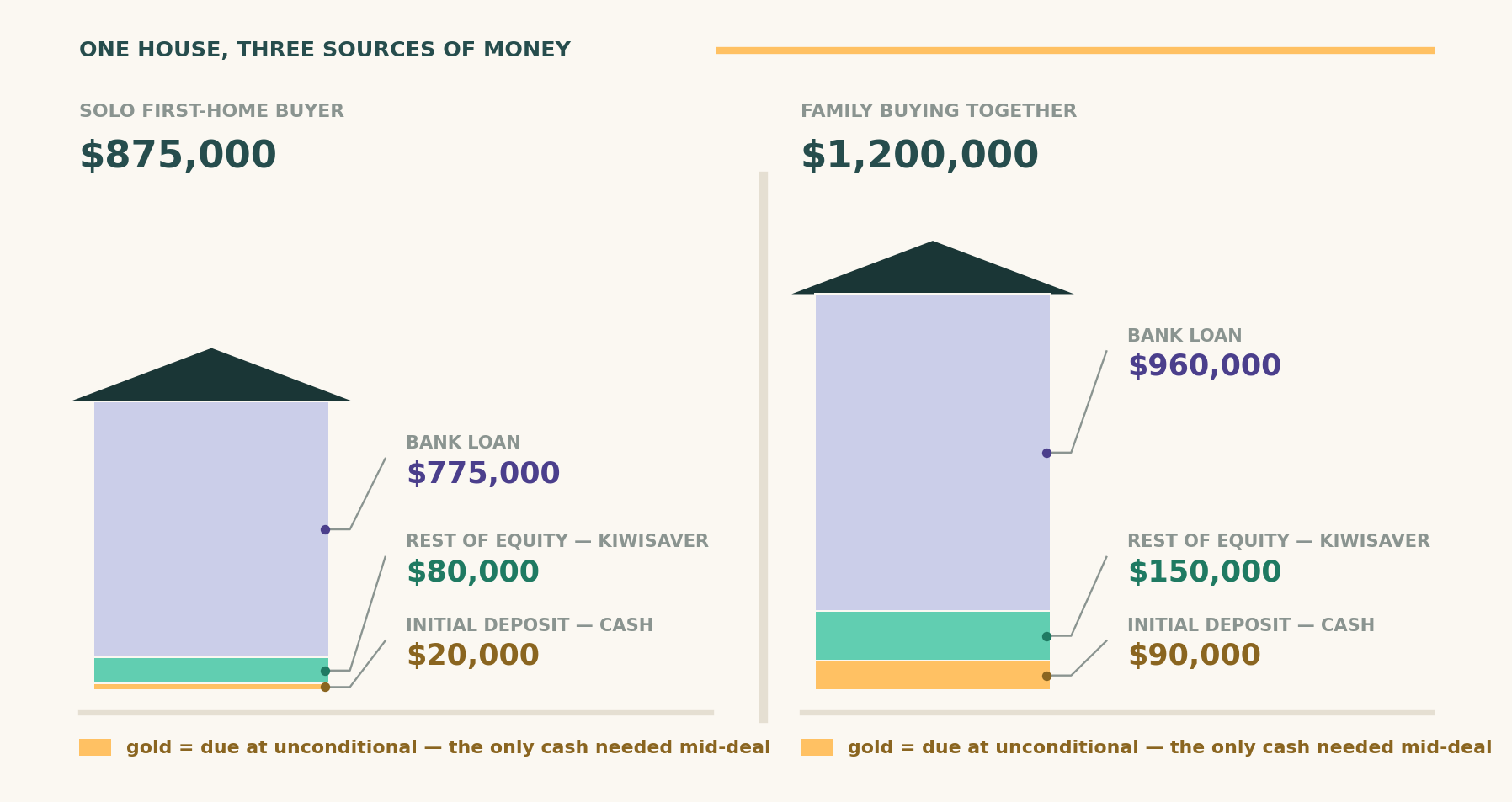
The deposit as a whole is really the client’s equity — savings, KiwiSaver, gifts, managed funds — everything going in that isn’t the bank’s money. That sets the loan-to-value ratio and it all lands on settlement day. The initial deposit is a different animal: the payment on the front page of the agreement, due when it goes unconditional, usually two to four weeks before settlement. Market standard is 10%, but it doesn’t have to be — what matters is that it is money the client can actually pay on the day the conditions are satisfied. A buyer whose whole deposit is locked in KiwiSaver has nothing to offer until settlement, which makes them less appealing to sellers who are buyers too.
On an $875,000 purchase the agreement asked for the standard $87,500 on unconditional. The client had $100,000 of equity, but $80,000 was KiwiSaver, which can’t move until settlement — her actual cash was $20,000. One email to the vendor’s lawyer, sent the day after signing, varied the deposit: $20,000 on the unconditional date, and the balance within one working day of the KiwiSaver funds clearing. Same total, same protection for the seller, a schedule that matches where the money sits. The same variation works on the headline number itself — we’ve had a $120,000 initial deposit reduced to $90,000 with the rest following at settlement. No reasonable vendor’s lawyer blinks at either.
Free tool for your clients: our deposit calculator shows the two-payment split as you drag the numbers — price, cash and KiwiSaver — and flags whether the cash actually covers the deposit. Send them the link: houseme-calculators.pages.dev/HouseMe-Calculator-Deposit-Split