Read Time: 3 minutes.
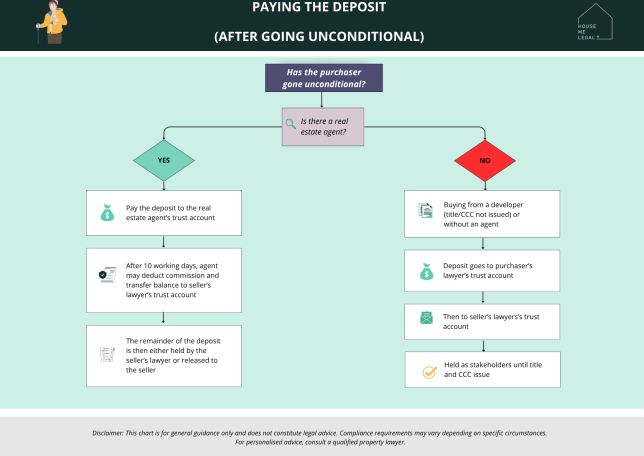
Download our Deposit Flowchart: Link here.
Your client’s gone unconditional and asks,
“So... who do I pay the deposit to?”
It sounds simple, but the answer depends on who’s in the deal — and getting it wrong can delay settlement or trigger AML headaches.
Deposits can never go directly to the seller.
If your client pays into the wrong account, it can freeze funds, hold up title release, or land everyone in compliance trouble.
Most buyers assume the deposit goes to the real estate agent’s trust account.
That’s usually true — but there are two key exceptions:
The deposit is paid to the purchaser’s lawyer’s trust account, then transferred to the seller’s lawyer’s trust account.
This double-step is required for AML purposes — sellers can’t receive the funds directly.
The deposit goes through both lawyers’ trust accounts again and is held as stakeholders until title and CCC have issued.
The Deposit Check Protocol
1. Confirm who’s holding the deposit.
If there’s an agent, it’s their trust account. If not, it goes via both lawyers.
2. Always confirm account details by phone.
Never rely on emailed bank numbers. This quick call stops fraud before it starts.
3. Understand the 10-day rule.
After holding the deposit for 10 working days, the agent can deduct their commission and transfer the balance to the seller’s lawyer’s trust account.
And as I like to say:
"If there’s one thing a real estate agent’s good at, it’s chasing you for the deposit."
Forward this to a broker who still thinks every deposit goes straight to the agent.