Volume #75: How to Handle Issues Found in a Pre-Settlement Inspection
Read Time: 4 minutes
PROBLEM
Buyers are usually entitled to one pre-settlement inspection.
This is commonly arranged with the real estate agent the week before settlement.
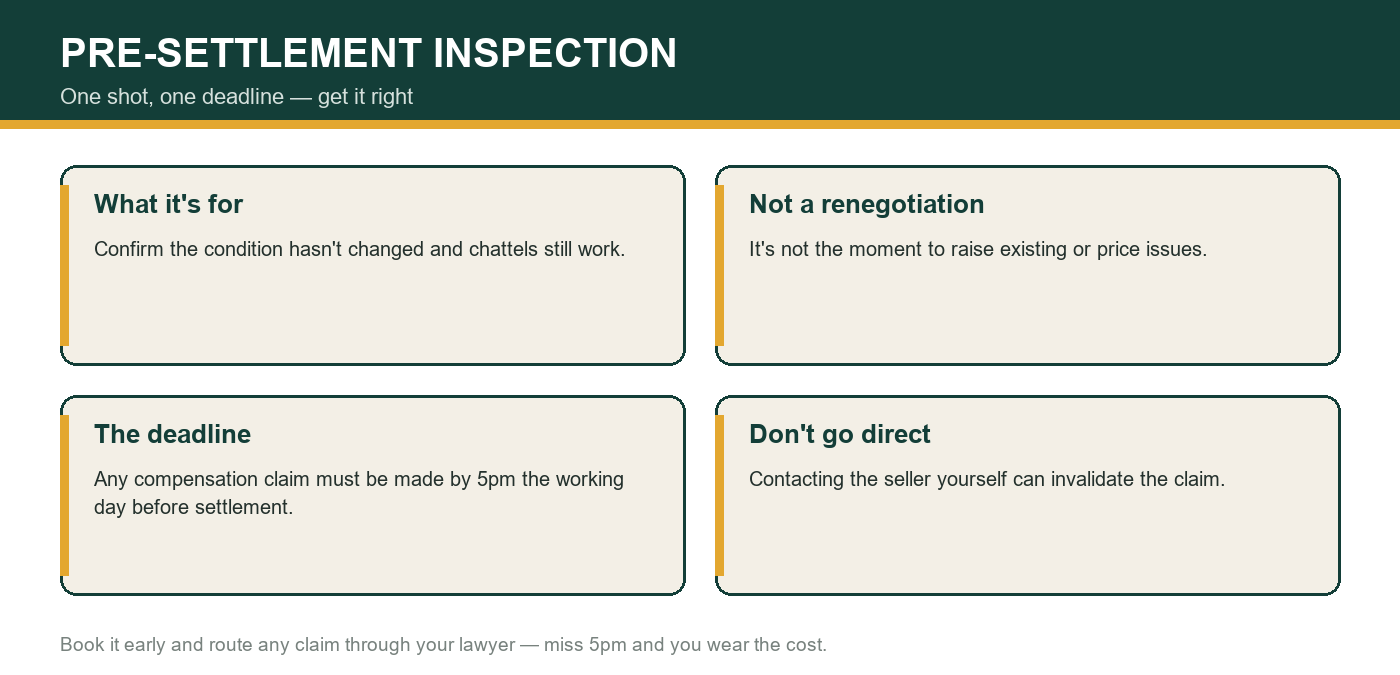
The goal: check the property is in the same condition it was when the agreement was signed, and confirm that chattels are still in working order.
But if the inspection is left too late — or done without a clear process — issues may be missed, rights can be lost, and settlement could be delayed.
RISK
Any claims for compensation must be made by 5pm on the working day before settlement
If that deadline is missed, buyers may lose the ability to delay settlement or withhold funds
Attempting to contact the seller directly can complicate or invalidate the claim process
Unresolved defects discovered too late may result in out-of-pocket repairs after settlement
PRE-SETTLEMENT INSPECTION: PURPOSE
The inspection is not an opportunity to renegotiate or raise existing issues.
It is solely to:
Confirm the property’s condition hasn’t changed
Check that agreed repairs have been completed (if any)
Ensure all listed chattels are in good working order
WHAT TO CHECK DURING INSPECTION
✅ Key areas to test:
Lights, power plugs, and electrical fittings
All taps (hot and cold), drainage from sinks and showers
Oven and hob power on and heat correctly
Dishwasher powers on and starts
Kitchen extractor and bathroom fans operate
Heat pump functions on heating and cooling
Garage door remotes work
Also confirm:
Any agreed repairs or maintenance have been completed
No new damage has occurred (e.g. from the seller moving out)
IF SOMETHING’S WRONG
Do not contact the seller directly
Notify the real estate agent and your lawyer immediately
The issue must be raised with the seller’s lawyer by 5pm the working day before settlement
RESOLUTION OPTIONS
Depending on the issue and timing, you may:
Re-enter the property to confirm the seller has completed repairs
Agree to a purchase price reduction and manage repairs post-settlement
Agree to retain funds in trust, released only once the seller completes the work
Make a formal compensation claim under clause 10 of the agreement
⚠️ The compensation clause should only be used where the amount in dispute is significant.
If the cost to repair the issue falls within the Disputes Tribunal’s monetary threshold, it’s usually better to proceed with settlement and resolve the issue separately.
Why?
Because using clause 10 will trigger the formal valuation process, which requires appointing an independent assessor — often leading to added costs and delays for both parties.
For smaller issues, this process can become disproportionate to the value in dispute.
ISSUES FOUND AFTER SETTLEMENT
Even if the claim deadline passes, sellers remain bound by warranties under the agreement.
If a chattel is found not to be working and was warranted as functional:
A compensation claim may still be possible
The claim would likely need to go through the Disputes Tribunal, depending on the amount
Buyers should seek legal guidance immediately if any issues arise after settlement.
TL; DR
Pre-settlement inspections confirm the property is unchanged and chattels work
Complete the inspection 4–5 days before settlement, ideally with the agent present
Report issues to your lawyer before 5pm on the working day before settlement
Use clause 10 only for significant issues — minor disputes should go through the Disputes Tribunal
Some warranty claims may still apply after settlement
Bonus:
If you are worried about the state of cleanliness, include a specific clause in the further terms.
State that the vendor must arrange and pay for a commercial clean before settlement and must give your lawyer a copy of the invoice and confirmation that the clean has been completed.
If this is not done, a credit of $[insert amount] will be applied in the settlement statement.
Broker On the Beach Newsletter
Every week, I’ll send you time-saving strategies and tools to guide your clients through buying their first home — with less stress and more results.