Read Time: 3-4 minutes
Buying privately can feel straightforward.
No agents.
No pressure.
A simpler deal, right?
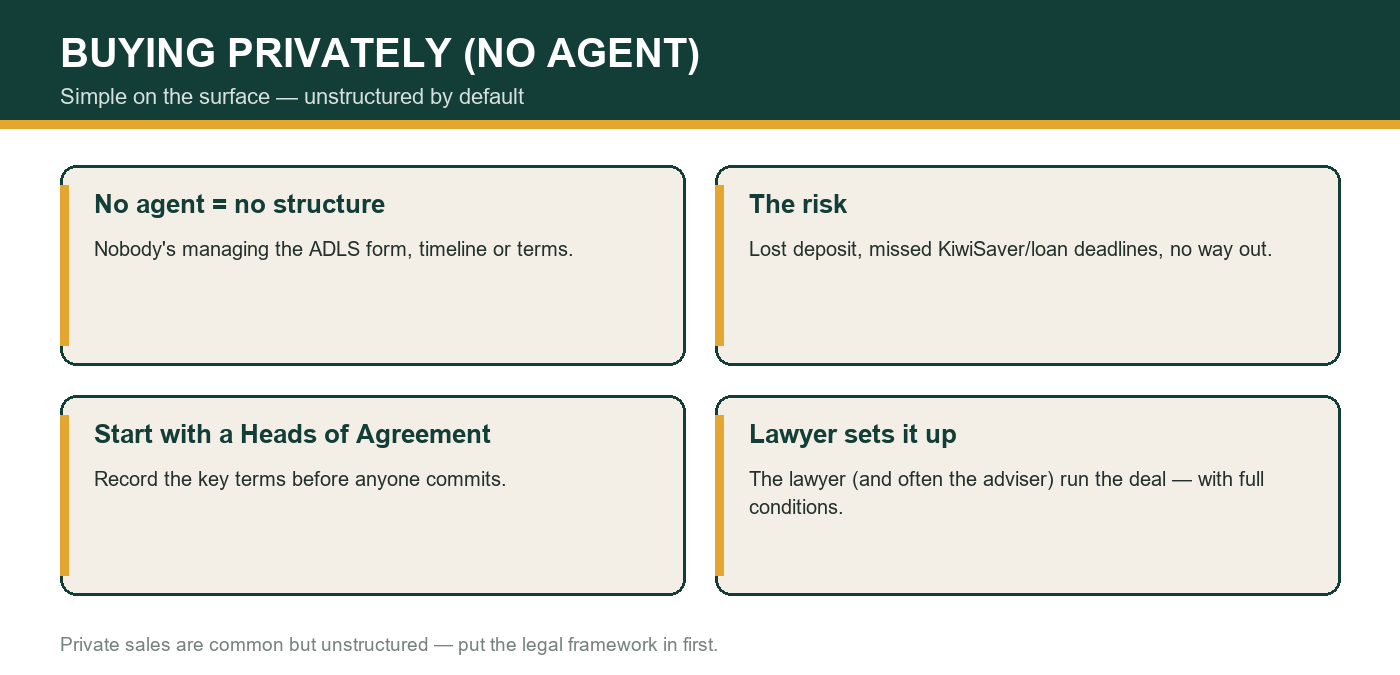
But that also means no one to manage the legal process — no ADLS form on hand, no timeline guidance, and no one double-checking that your client’s terms are actually in the contract.
That’s where things go wrong.
Without the right legal framework in place, your client might:
For you, it could mean urgent calls from clients when the bank won’t give live approval — or worse, the deal falls over and the client blames the process.
Private sales are common in New Zealand. But they’re also unstructured by default.
Most start casually:
But without a real estate agent involved, it's the lawyer (and often, the mortgage advisor) who end up setting up the deal.
Use this framework with clients before they commit.
It protects them — and keeps your deal moving.
Before anything is signed, both parties should confirm the basic terms in writing:
This document should be marked non-binding, with wording like:
“This document is not legally binding (except for confidentiality) and is subject to a formal Sale and Purchase Agreement.”
It sets expectations, but doesn’t lock anyone in.
Once the Heads of Agreement has been agreed, your client’s lawyer will draft the proper contract (the same one agents use) tailored to the deal.
This is generally driven by the purchaser, as they are bringing the offer to the seller.
The agreement must include:
This is the only contract form accepted by banks and KiwiSaver providers.
A due diligence condition gives your client a wide safety net.
It allows them to cancel the contract for any reason within the timeframe — no explanation required.
Typical wording:
“This agreement is conditional upon the Purchaser being satisfied, in the Purchaser’s sole discretion, with the result of the Purchaser’s due diligence investigation of the property by 4pm on the date that is 10 working days after the date of this agreement.”
This clause should be included under “Further Terms of Sale.”
Avoid relying solely on finance or builder’s report clauses — they’re too narrow.
Encourage your client to move fast. Ten working days is tight if they don’t book inspections and reviews straight away.
What needs to be done:
If problems are found, the buyer can:
If all investigations check out, the buyer confirms the contract unconditional through their lawyer.
At this point:
After this, there’s no backing out without legal consequences.
The lawyers coordinate the entire settlement behind the scenes.
Here’s the typical sequence:
🕐 Most settlements happen between 12–3pm.