Two families, one shared mortgage across two properties. How we split it cleanly without a dollar changing hands unnecessarily.
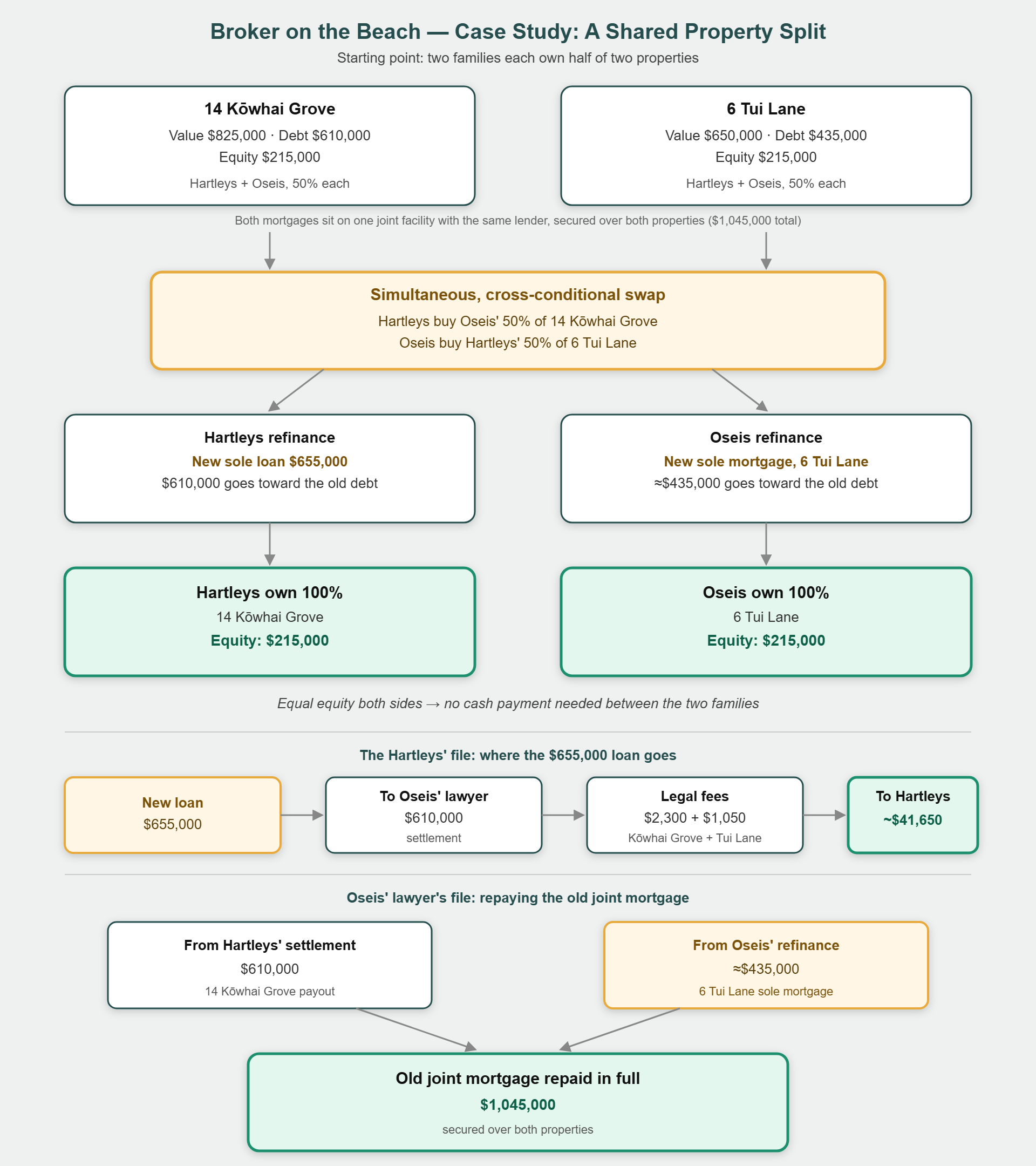
Two sisters and their partners had bought two properties together over a decade and lived one couple per house, still owning both jointly between the four of them. When they went their separate ways the plan looked simple — one family keeps each house, everyone signs. It wasn’t simple: a single mortgage sat across both properties, split into six loan tranches under one facility. This is the harder cousin of the one-property-each split — you cannot split two homes cleanly when the debt itself doesn’t split along the same lines.
A split like this comes apart in a few predictable ways. The price on a settlement statement gets confused with a mortgage balance quoted elsewhere in the agreement. One lender funds on the day and the other doesn’t — and because the security sits across both titles under one facility, neither discharge can happen until both refinances land together. Or one side treats it as a family formality and skips independent advice, which undermines the whole split if anyone questions it later.
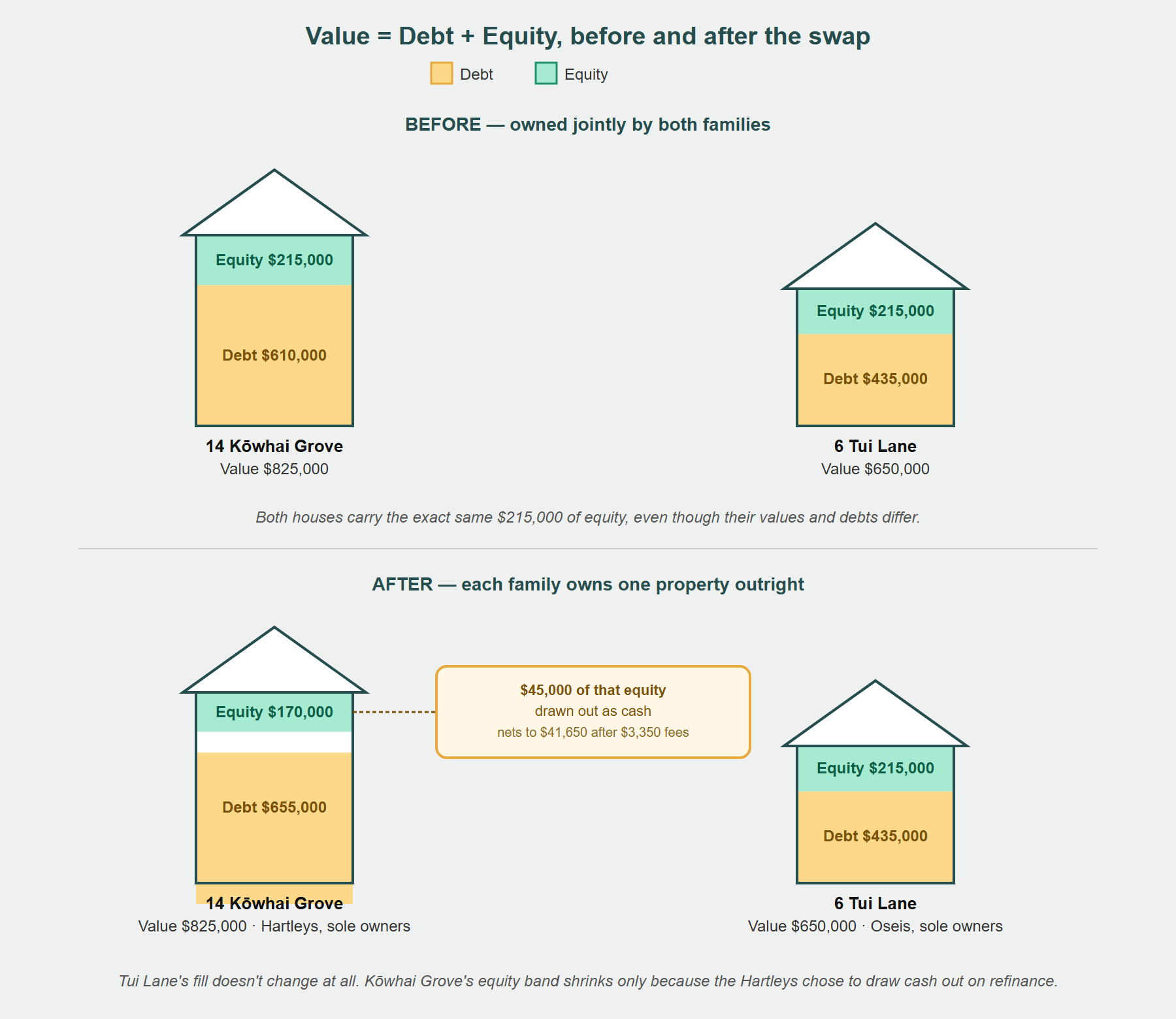
Each property needed its own sale and purchase agreement, each conditional on the other settling the same day. Both families instructed their own solicitor, and each refinanced enough to buy the other out and release them from the joint debt — the two incoming refinance amounts added together matched the lender’s single payout figure. Because the equity landed almost exactly even, no cash needed to pass between them. If you have a client sitting on a shared-ownership arrangement — siblings, business partners, blended families — send it our way before anything gets signed.